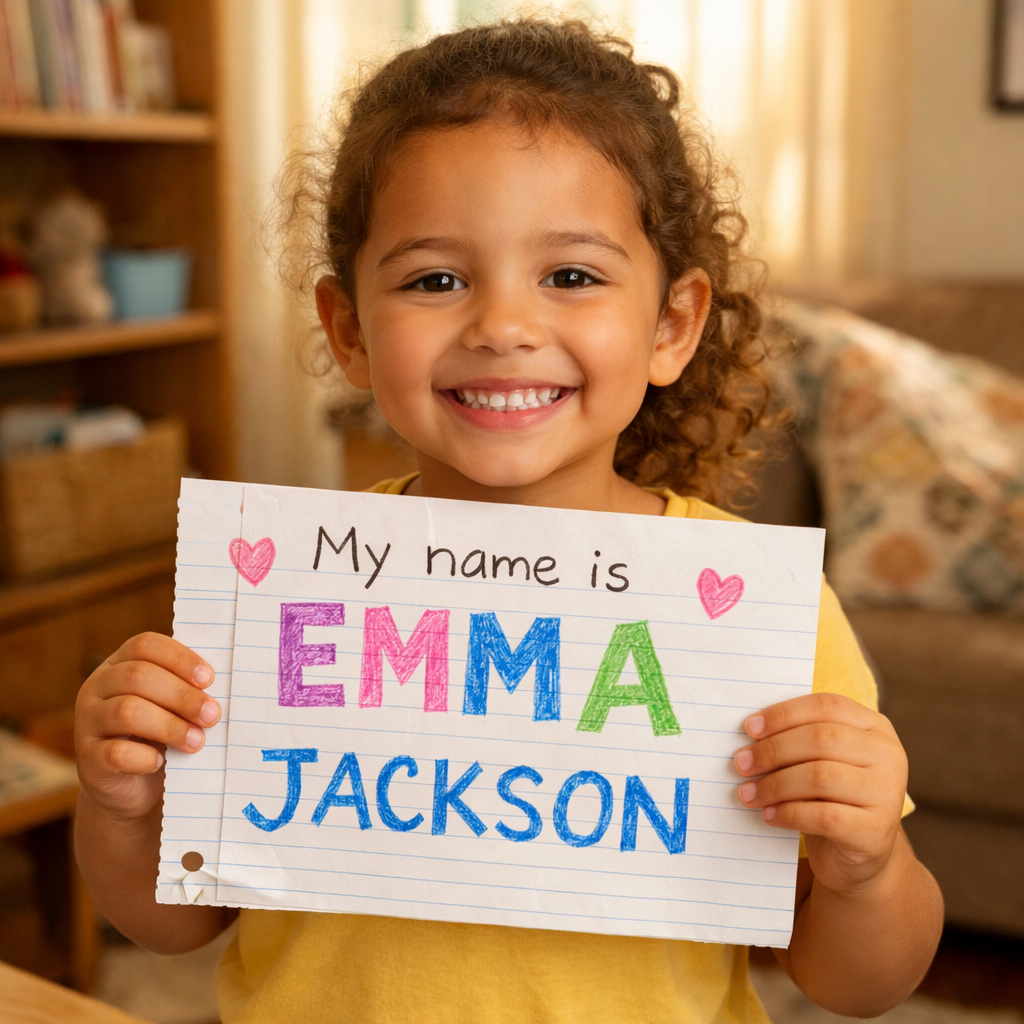
Let me tell you something I’ve seen more times than I can count.
I’ll ask a child,
“What’s your name, sweetheart?”
And they’ll smile real big and say,
“Pookie.”
Not their real name.
Not the name on their birth certificate.
Not the name on their school papers.
Just Pookie.
Now listen—nicknames are cute. I love a good nickname. I’ve called my own babies all kinds of things. But when it comes to safety, school, and confidence, our children need to know their real information.
And here’s the good news:
You don’t need flashcards, worksheets, or pressure.
Kids learn best when they’re playing, laughing, and relaxed.
So let me put my teacher hat on for a minute and share some easy, fun games you can use right at home.
Why This Matters (Without Scaring You)
Children should know:
- Their full name
- Their birthday
- Their home address
- A parent’s phone number
Not because we’re being strict—but because life happens.
Kids get lost.
Phones die.
Adults ask questions.
Schools expect answers.
When children know this information, they walk a little taller. They feel capable. And they’re safer.
Now let’s make learning it fun.
Game #1: The “Mic Check” Game
This one is a classroom favorite.
Pretend you’re holding a microphone. (A hairbrush works just fine.)
You say:
“Mic check! State your name!”
Your child says:
“My name is ________.”
Then you clap like they just won a talent show.
You can level it up:
- “Mic check! What’s your birthday?”
- “Mic check! Where do you live?”
Kids love pretending they’re being interviewed. You’re building confidence without them even realizing it.
Game #2: Car Ride Quiz (No Pressure Allowed)
Car rides are golden teaching moments.
Instead of,
“What did you learn at school?” (which usually gets silence)
Try:
“Okay, let’s play a quick game before this light turns green.”
Ask one question:
- “What’s Mommy’s phone number?”
- “What street do we live on?”
If they don’t know—no big deal.
You say it with them.
Learning sticks when kids feel safe to get it wrong.
Game #3: Make It a Song
Listen… children remember songs way better than lectures.
Make up a silly tune:
🎵 “My name is Jordan Lee, I was born on May 3…” 🎵
It doesn’t have to sound good.
Trust me—I’m a teacher, not a singer.
Repeat it during:
- Bath time
- Bedtime
- Cleanup time
Soon enough, they’ll be singing it back to you.
Game #4: Pretend You’re Lost (Just Pretend!)
I know this sounds serious, but kids actually enjoy role-play.
You say:
“Okay, let’s pretend you’re in the store and can’t find me. What would you tell the helper?”
Let them practice:
- Their name
- Your name
- Your phone number
Keep your tone calm and playful. This builds real-world readiness without fear.
Game #5: Write It, Draw It, Decorate It
Get paper, crayons, markers—whatever you have.
Have your child:
- Write their name
- Draw their house
- Decorate their phone number with hearts, stars, or smiley faces
Learning doesn’t always have to be neat.
It just has to be meaningful.
A Teacher’s Tip (Listen Close)
Don’t rush this.
Don’t quiz like it’s a test.
Don’t correct with frustration.
Children learn through repetition, routine, and encouragement.
Say it together.
Laugh through mistakes.
Celebrate effort.
That’s how confident kids are built.
In the Classroom, I Can Tell…
I can always tell which children have practiced this at home.
They answer clearly.
They speak up.
They don’t panic when asked.
And that confidence carries into reading, writing, and social skills.
You’re not just teaching information—you’re teaching self-trust.
Final Thought from Me to You
You don’t need to be perfect.
You don’t need fancy tools.
You just need a few minutes, a playful attitude, and consistency.
And one day, when someone asks your child their name, they won’t say “Pookie.”
They’ll say it loud.
They’ll say it proud.
And you’ll smile—because you helped them get there.


